sedation dentist near me

Sleep-Disordered Breathing (SDB) in
Sandy Springs & Cumming, GA

When Eight Hours in Bed Still Does Not Feel Like Rest

Sleep should restore the body and brain, but some people spend the night repeatedly working harder to breathe, partially waking, gasping, or reopening an airway that has narrowed or collapsed. They may remember none of it and still wake with a dry mouth, headache, sore jaw, heavy fatigue, or the sense that eight hours of sleep was not enough.

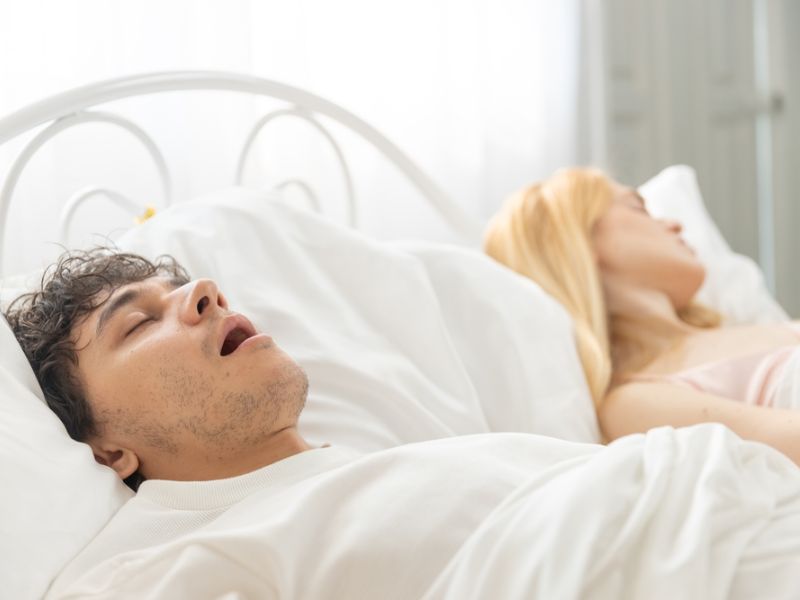
Sometimes a bed partner notices the problem first: loud snoring, breathing pauses, choking sounds, restless movement, or open-mouth breathing. Other clues appear during the day as poor concentration, irritability, sleepiness, or reduced energy.

The mouth can also hold clues. A narrow palate, crowded tongue space, worn teeth, grinding, gum recession, orthodontic relapse, or a lower jaw that sits relatively far back may prompt more questions. None of these findings diagnose a sleep disorder, but they can identify patients who deserve a more complete evaluation.

At Pinewood Dentistry and Implants, we assess sleep-disordered breathing (SDB) in Sandy Springs & Cumming, GA, by looking beyond snoring alone. We consider symptoms, dental and orthodontic history, the bite, jaw relationships, tongue space, oral structures, breathing patterns, and previous sleep testing when available. When the concern may represent obstructive sleep apnea or another medical sleep disorder, objective sleep testing and physician involvement are an important part of the process.

When researching sleep-disordered breathing (SDB) near you, the first goal should not be choosing an appliance. It should be finding out what is happening during sleep, how severe it is, what may be contributing, and which parts of the problem dentistry can meaningfully address.

What Is Sleep-Disordered Breathing?

Sleep-disordered breathing is an umbrella term for abnormal breathing patterns that occur during sleep. It covers a spectrum rather than one single diagnosis.

At one end, a person may snore because airflow through the upper airway has become turbulent. Farther along the spectrum, increased resistance can make the body work harder to breathe and trigger repeated arousals. Obstructive sleep apnea involves recurrent partial or complete obstruction of the upper airway, causing reductions or pauses in airflow and repeated disruptions of normal sleep.

Snoring happens when tissues in the upper airway vibrate as air moves through a narrowed space. Some people snore without meeting diagnostic criteria for obstructive sleep apnea.
That distinction matters because snoring can also be an early warning sign of obstruction. A dentist should not assume that loud snoring is harmless, and a patient should not assume that the absence of dramatic choking means sleep apnea is impossible.

Some patients experience increased resistance to airflow and repeated sleep disruption even when a sleep study does not show the classic number of apneas and hypopneas associated with obstructive sleep apnea. This pattern is often discussed in relation to upper airway resistance syndrome, or UARS.

These patients may report unrefreshing sleep, fatigue, headaches, light sleep, insomnia-like symptoms, or significant daytime impairment. Evaluation requires more than simply asking whether the patient snores.

Obstructive sleep apnea, or OSA, occurs when the upper airway repeatedly narrows or collapses enough to reduce or stop airflow during sleep. The brain responds by briefly increasing arousal so breathing can resume. These events can happen repeatedly through the night even when the patient has no memory of waking.

The result is not simply “bad sleep.” OSA can affect oxygen levels, sleep continuity, and the normal restorative functions of sleep. Untreated OSA is associated with important health risks, including hypertension, cardiovascular disease, metabolic problems, impaired daytime alertness, and increased accident risk.

Not every pause in breathing is obstructive. Central sleep apnea involves a problem with the brain’s respiratory control rather than a physical upper-airway blockage, so it requires medical diagnosis and management rather than a dental appliance. This is another reason formal diagnosis matters.

What Symptoms Can Sleep-Related Breathing Problems Cause?

Sleep-disordered breathing can look different from one person to another. Some patients have obvious nighttime symptoms. Others mainly notice what happens after they wake up.

Common nighttime clues include:

  • Loud, persistent snoring
  • Witnessed pauses, gasping, choking, or snorting
  • Restless sleep or frequent position changes
  • Mouth breathing
  • Nighttime grinding or clenching
  • Repeated waking or nighttime urination

Daytime signs may include waking unrefreshed, morning headaches, dry mouth, excessive sleepiness, brain fog, irritability, or difficulty staying alert during quiet activities or driving.

Not everyone with these symptoms has OSA, and not everyone with OSA feels obviously sleepy. Symptoms should lead to evaluation rather than self-diagnosis.

Why Can the Mouth and Jaws Matter?

Many structures influence the upper airway: the nose, soft palate, tongue, tonsils, throat, upper and lower jaws, and surrounding soft tissues. Body weight, muscle tone, sleep position, alcohol or sedative use, nasal obstruction, and other medical factors can also affect airway stability.

Dentistry becomes relevant when the anatomy of the mouth and jaws may be one part of that picture.

Jaw Position and Tongue Space

The tongue is attached to and influenced by structures around the lower jaw. In some patients, a relatively retruded lower jaw or limited oral space can contribute to crowding of the tongue toward the back of the mouth during sleep.

This is the principle behind mandibular advancement oral appliances: by supporting the lower jaw in a controlled forward position, an appliance can increase space behind the tongue and reduce airway collapse in appropriately selected adults.

Upper-Jaw Width

The upper jaw, or maxilla, forms the upper dental arch, the roof of the mouth, and part of the floor of the nasal cavity. A significantly narrow maxilla may be associated with a narrow palate, crossbite, crowding, limited tongue space, and reduced transverse dimensions.

For selected growing patients, conventional expansion may be considered. For appropriate older teens and adults, Pinewood may evaluate whether MARPE is relevant when true skeletal transverse deficiency is present.

Expansion is not a universal treatment for sleep apnea. It addresses skeletal width. Whether changing that width improves breathing or sleep depends on the patient’s anatomy and the other factors contributing to the disorder.

Teeth, Bite, and Nighttime Grinding

Tooth wear, cracked restorations, recession, or muscle soreness from grinding may appear alongside sleep-related breathing concerns. Bruxism has multiple causes and does not prove airway restriction, but significant wear combined with snoring, poor sleep, or morning headaches gives us another reason to ask what may be happening at night.

How Is Sleep-Disordered Breathing Evaluated at Pinewood?

A useful sleep-breathing evaluation should separate screening from diagnosis.

Pinewood’s role is to identify risk, examine dental and structural factors, help patients obtain appropriate objective testing when needed, and provide dental treatment when it fits the diagnosis. We do not replace the sleep physician or assume that a dental examination can determine the severity of OSA.

The first appointment begins with symptoms and history.

We may ask about snoring, witnessed breathing pauses, gasping, mouth breathing, morning headaches, dry mouth, fatigue, daytime sleepiness, grinding, jaw discomfort, and how rested you feel after sleep.

A bed partner’s observations can be valuable because many breathing events occur without the patient knowing.

We also review relevant medical history, medications, previous sleep studies, CPAP use, oral appliances, ENT treatment, orthodontic history, jaw surgery, and changes in weight or health that may affect sleep.

The oral examination may include the teeth, bite, jaw relationship, palate, tongue space, soft tissues, tooth wear, recession, and TMJ or muscle symptoms. We also look for patterns such as a narrow upper arch, significant crowding, or a lower-jaw relationship that deserves closer assessment.

These findings may identify risk or structural contributors, but they cannot determine how many breathing events occur during sleep.

Digital scans, photographs, X-rays, and 3D imaging may be appropriate depending on the treatment being considered.

For an oral appliance, digital scans can capture the teeth and bite so a custom device can be designed accurately. For a patient being evaluated for orthodontic expansion or MARPE, 3D records may help assess jaw width, available bone, tooth position, and other craniofacial relationships.

Imaging does not replace a sleep study for diagnosing OSA. It answers different questions.

When symptoms suggest obstructive sleep apnea or another sleep disorder, objective testing is important.

For some adults, a physician-directed home sleep apnea test may provide useful diagnostic information. Other patients need an in-lab polysomnogram because their symptoms, medical history, or suspected condition requires more comprehensive monitoring.

Children are different. Suspected pediatric sleep apnea should be medically evaluated, and adult-style home testing should not simply be substituted for appropriate pediatric sleep assessment.

The sleep study helps determine whether OSA is present and, when applicable, how severe the breathing disturbance is. That information changes the treatment conversation.

Once the clinical findings and sleep information are available, we can discuss which factors dentistry can address.

Some patients are excellent candidates for oral appliance therapy. Others are better served by CPAP, ENT care, medical management, weight-related treatment, positional therapy, surgery, orthodontic expansion, or a combination of approaches.

The correct question is not, “Which appliance does Pinewood use?”

It is, “What is causing this patient’s nighttime breathing problem, and which treatment is most appropriate for that cause and severity?”

How Are Sleep-Related Breathing Disorders Treated?

There is no single treatment for every patient because the same symptom—such as snoring—can result from very different anatomy and physiology.

Treatment What It Addresses When It May Be Considered
Orthodontic expansion or MARPE Addresses a genuinely narrow upper jaw and limited transverse skeletal width Selected children, older teens, or adults when structural deficiency is confirmed
Positive airway pressure (PAP/CPAP) Uses pressurized air to prevent airway collapse Common and highly effective treatment for OSA, particularly when reliable control of obstruction is needed
Custom oral appliance therapy Supports the lower jaw in a controlled forward position to reduce upper-airway collapse Selected adults with OSA or primary snoring after appropriate diagnosis and treatment planning
ENT or medical treatment Addresses nasal obstruction, tonsils, adenoids, allergies, or other medical contributors When upper-airway disease or another medical factor is part of the problem
Jaw surgery Changes significant skeletal jaw relationships and can enlarge parts of the airway Selected patients with major craniofacial deficiency or OSA requiring surgical management
Myofunctional therapy Works on tongue posture, lip seal, swallowing, and oral muscle patterns An adjunct for selected patients, often alongside structural or medical treatment
Lifestyle and positional strategies Addresses modifiable contributors such as sleep position, alcohol use, or weight when relevant Often used as part of a broader medical sleep plan

How Does Oral Appliance Therapy Work?

Oral appliance therapy is one of the main areas where dentistry can directly participate in the management of obstructive sleep apnea and snoring.

A custom mandibular advancement device fits over the teeth and holds the lower jaw in a measured forward position during sleep. This can help keep the tongue and surrounding soft tissues from collapsing backward as easily and can improve upper-airway patency in selected patients.

It is not the same as an over-the-counter snoring guard.

A properly managed appliance needs to fit the patient’s teeth, jaw relationship, bite, and tolerance. It also needs to be adjustable so the mandibular position can be changed gradually rather than simply pushing the jaw as far forward as possible.

Who May Be a Candidate?

Oral appliance therapy may be considered for adults with diagnosed OSA who prefer an alternative to CPAP or cannot tolerate positive airway pressure, as well as certain adults with primary snoring after sleep apnea has been appropriately excluded.

Candidacy also depends on dental health, the stability of the teeth and gums, existing restorations, the bite, jaw-joint and muscle health, and how comfortably the lower jaw can move forward. An appliance that helps one patient may be inappropriate for another.

What Happens After the Appliance Is Delivered?

Treatment is not finished when the device is handed to you.

We check fit and comfort, show you how to insert and remove the appliance, review cleaning and storage, and gradually adjust the advancement when needed.

Follow-up is important because oral appliances can cause temporary jaw or muscle soreness, tooth discomfort, increased salivation or dry mouth, and changes in the bite or tooth position over time.

Long-term monitoring allows us to look for these changes and address them early.
Objective follow-up sleep testing may also be recommended to confirm that the appliance is actually controlling the sleep-related breathing disorder. Feeling better is important, but symptom improvement alone does not always tell us whether breathing events have been adequately treated.

service for sleep-disordered breathing

Oral Appliance or CPAP: Which Is Better?

This is one of the most common questions patients ask, but the answer depends on what “better” means for that person.

CPAP is highly effective at preventing upper-airway collapse when it is worn consistently and is generally more effective than oral appliances at reducing respiratory events and improving oxygen measures in OSA.

Some patients struggle to use CPAP consistently because of the mask, pressure, dryness, travel, or difficulty sleeping with the equipment.

A custom oral appliance is smaller, quiet, and portable. For appropriately selected adults who cannot tolerate CPAP or prefer an alternative, it can be an evidence-based treatment option.

The choice should not become “dentistry versus CPAP.” Both are tools.

For some patients, CPAP is clearly the better answer. For others, an oral appliance provides an effective alternative. Some use combination therapy. The treatment should match the diagnosis, severity, anatomy, medical history, and what the patient can realistically use every night.

Where Do Orthodontics, MARPE, and Airway Treatment Fit In?

Pinewood’s airway philosophy goes beyond placing a sleep appliance because not every structural problem is a lower-jaw-position problem.

Some patients also have a narrow upper jaw, limited tongue space, significant crowding, crossbite, orthodontic relapse, or other craniofacial findings.

For a growing child, jaw development and palatal width may be considered as part of a pediatric airway and growth evaluation.

For selected adults and older teens with true maxillary transverse deficiency, MARPE may create skeletal width by expanding the upper jaw with the support of temporary anchorage devices. Clear aligners or comprehensive orthodontics then guide the teeth and bite into the new foundation.

These treatments address structure. They should not be presented as guaranteed cures for OSA.

A patient may have both a narrow maxilla and diagnosed OSA, but correcting one anatomical factor does not automatically eliminate every other contributor to airway collapse. Sleep testing and multidisciplinary follow-up remain important.

This is one of the defining ideas behind Pinewood’s approach: airway care should not be reduced to one appliance, one X-ray, or one symptom.

Why Treating the Right Sleep-Breathing Problem Matters

The benefits of treatment depend on the diagnosis and whether the chosen therapy actually controls the disorder.

For someone with primary snoring, successful treatment may primarily improve nighttime noise and sleep disruption for the patient and partner.

For someone with OSA, effective treatment has a more important medical purpose: reducing repeated airway obstruction and the sleep fragmentation and physiologic stress that go with it.

Depending on the condition and response to treatment, patients may notice less snoring or gasping, more continuous sleep, fewer morning headaches or dry-mouth symptoms, and improved daytime alertness.

Not every symptom disappears when OSA is treated, because fatigue and poor sleep can have many causes. The goal is to control the diagnosed breathing disorder and keep investigating if symptoms remain.

What Makes Pinewood’s Sleep and Airway Approach Different?

Pinewood Dentistry and Implants approaches sleep and airway concerns as part of a larger system.

A patient may arrive because of snoring but also have worn teeth, clenching, gum recession, limited tongue space, orthodontic relapse, a narrow upper jaw, or an uncomfortable bite. Another may already have a sleep-apnea diagnosis but cannot tolerate CPAP. A child may have mouth breathing and a developing crossbite but need an ENT involved before dental treatment is considered.

These situations should not all receive the same solution.

We Screen Without Pretending Screening Is Diagnosis

You do not need an existing sleep-apnea diagnosis, sleep study, or referral to begin an airway conversation at Pinewood.

We can review symptoms, look for dental and structural clues, and help determine whether objective testing or medical evaluation should come next.

But when a medical sleep diagnosis is needed, we do not replace that process with a dental opinion.

We Look at More Than the Throat

The teeth, bite, upper-jaw width, lower-jaw relationship, tongue space, periodontal health, grinding patterns, previous orthodontics, and TMJ symptoms can all provide useful information.

For some patients, these findings have little to do with the sleep disorder. For others, they help explain why the airway behaves the way it does.

We Have More Than One Dental Tool

Depending on the patient, the dental part of care may involve a custom oral appliance, orthodontic or expansion treatment, MARPE, myofunctional therapy coordination, restorative care for worn teeth, or collaboration with an ENT, sleep physician, oral surgeon, or another provider.

Having several options does not mean every patient needs several treatments. It allows the plan to follow the problem rather than making every problem fit the same device.

We Plan for Follow-Up, Not Just Delivery

Sleep and airway care needs monitoring.

Oral appliances require adjustment and evaluation for dental or bite changes. Orthodontic expansion needs follow-up to assess stability and tooth position. Diagnosed OSA may require repeat objective testing to confirm treatment effectiveness.

Long-term care matters because a therapy that feels comfortable is useful only if it is also doing the job it was prescribed to do.

Start With Answers, Not an Appliance

If you snore, wake exhausted, grind your teeth, struggle with CPAP, have limited tongue space, or have been told your jaw structure may be contributing to an airway concern, you do not have to know which treatment you need before making an appointment.

You also do not need to arrive with a sleep study just to begin the conversation.

An airway evaluation at Pinewood Dentistry and Implants can help organize the pieces: what you experience at night, what we see in the mouth and jaws, what previous treatment has already been tried, and whether objective sleep testing or another specialist should be involved.

If you are researching sleep-disordered breathing (SDB) near you, the most useful next step is an evaluation that separates symptoms from diagnosis and diagnosis from treatment.
Some patients need CPAP, some are candidates for an oral appliance, and others need medical, ENT, orthodontic, or combined care.

The goal is not simply quieter sleep. It is understanding why breathing is being disrupted and choosing treatment that makes sense for the whole patient.

Contact Pinewood Dentistry and Implants to schedule a complimentary airway consultation at our Cumming or Sandy Springs location and find out what your symptoms may be telling you.

Have Questions About Sleep-Disordered Breathing?
Start Here.

No. Some people have primary snoring without obstructive sleep apnea, but frequent snoring is also a common sign of OSA. Persistent snoring—especially with witnessed pauses, gasping, morning headaches, or daytime sleepiness—deserves evaluation.

A dental team can screen for risk, recognize relevant oral and craniofacial findings, and coordinate testing and treatment. A dental examination alone does not diagnose OSA or determine its severity, so objective sleep testing and physician involvement are important when sleep apnea is suspected.

No. You can begin with an airway consultation without previous sleep testing. We can review your symptoms, dental findings, medical and orthodontic history, and previous treatment, then discuss whether a sleep study or medical evaluation should come next.

CPAP generally controls obstructive respiratory events more consistently. A custom oral appliance can still be effective for appropriately selected adults, especially those who cannot tolerate CPAP or prefer an alternative. Follow-up testing helps determine whether treatment is adequately controlling the disorder.

Expansion can address a genuinely narrow upper jaw and may change nasal dimensions, oral volume, and tongue space. Some patients notice breathing or sleep changes after expansion, but MARPE should not be presented as a guaranteed cure for OSA. Sleep apnea is multifactorial, and structural expansion addresses only the anatomical issues it is designed to correct.

Regular snoring or chronic mouth breathing in a child is worth discussing with a healthcare provider. Tonsils, adenoids, allergies, nasal obstruction, jaw development, and other factors may all be relevant. Pinewood offers pediatric airway and growth evaluations to assess dental and developmental findings, but suspected pediatric sleep-disordered breathing may also require evaluation by a pediatrician, ENT, or sleep specialist.